
"coffee climate factors"
3000 article(s) found

Introduction of Colombian Coffee Tangbo Manor and description of its Flavor characteristics
Colombian coffee exploration: washed with mellow creamy texture and citrus sour taste, the entrance is clean, with the sweetness of brown sugar. It shows aromas of apple, citrus, caramel, Earl Grey Tea and a hint of plums, with a sour taste of fresh lemon and a long finish. Cauca province is one of the well-known boutique coffee producing areas in Colombia, bordering Nalinglong in the west and Vera in the east.

Nicaraguan Coffee Los Congo Manor A brief introduction to the cultivation of Nicaraguan Coffee Manor, Climate and altitude
Bean species: red Kaduai Red Catuai treatment: honey treatment Honey cup test information: tobacco, cocoa, pear, malic acid, pleasant, medium alcohol thickness tabacco, cacao, pear, malic, pleasant, mid body cup test score: 86.5 Los Congo Manor is located in Dipilto, growing coffee in 10 plots above 1350 meters above sea level.

Introduction to the planting environment of Nicaraguan coffee Matagalpa producing area of Joy Manor
The planting conditions in Nicaragua are not inferior to those in Central American countries. Shaded coffee is grown at high altitudes. It tastes round and balanced with less sharp acid. The main unknown factor is war and hurricanes, which make a single farm unsustainable. There is no historical data for raw bean merchants to track and check farm data until after 2003, the bad factors of coffee quality are removed and backward intercourse.

The planting Environment of Coffee beans in Nicaragua the Manor of Matagalpa
The planting conditions in Nicaragua are not inferior to those in Central American countries. Shaded coffee is grown at high altitudes. It tastes round and balanced with less sharp acid. The main unknown factor is war and hurricanes, which make a single farm unsustainable. There is no historical data for raw bean merchants to track and check farm data until after 2003, the bad factors of coffee quality are removed and backward intercourse.

What factors determine the content of carbohydrates in coffee
What factors determine the amount of carbohydrates in coffee? local natives often grind the fruit of the coffee tree and knead it with animal fat to make many ball balls. These indigenous tribes use these coffee balls as precious food for soldiers who are about to go out to battle. It was not until around the 11th century that people began to use boiled coffee as a drink.

The planting conditions of Nicaraguan Coffee introduce the characteristics of Nicaraguan coffee beans
The planting conditions in Nicaragua are not inferior to those in Central American countries. Shaded coffee is grown at high altitudes. It tastes round and balanced with less sharp acid. The main unknown factor is war and hurricanes, which make a single farm unsustainable. There is no historical data for raw bean merchants to track and check farm data until after 2003, the bad factors of coffee quality are removed and backward intercourse.

Description of taste and flavor of Ugandan coffee introduction to manors of variety producing areas
The taste and flavor of Ugandan coffee is described by the variety producing area. Africa is the hometown of the two major varieties of coffee, Arabica and Robusta, while Uganda, which is located in eastern Africa, which enjoys the reputation of plateau water and the pearl of East Africa, is believed by many people as the birthplace of Robusta. Uganda is one of the few countries in the world that can grow both Arabica and Robusta.
Boutique Coffee talk about the taste of coffee
Coffee trees are very similar to laurel and usually grow between the Tropic of Cancer and the Tropic of Cancer. A coffee tree usually grows for about three to four years before it begins to bear fruit. The fruit is a red berry, which is dried and the pulp is removed to separate the coffee beans. There are shadows of coffee beans all over the world, and they can grow as usual as long as the climate is right. These are suitable for cultivating coffee.

A brief introduction to the cultivation of high-quality coffee beans in Kenya with rich taste, geographical location, climate and altitude
In addition to the prestigious traditional Arabica coffee, robusta coffee is also produced in the western lowlands of Kenya. Kenya coffee harvest season there are two harvest seasons in Kenya, the main harvest season is from October to December and the secondary harvest season is from May to July. Large coffee processing farms in Kenya usually have independent processing facilities. A large number of small farmers usually pick them by hand.

Introduction to the flavor and taste of Los Congo Manor Coffee Manor in Nicaragua
The planting conditions in Nicaragua are not inferior to those in Central American countries. Shaded coffee is grown at high altitudes. It tastes round and balanced with less sharp acid. The main unknown factor is war and hurricanes, which make a single farm unsustainable. There is no historical data for raw bean merchants to track and check farm data until after 2003, the bad factors of coffee quality are removed and backward intercourse.

Characteristics of Arabica coffee Arabica coffee beans taste soft and pleasant aroma
Professional coffee knowledge exchange more coffee bean information Please follow the coffee workshop (Wechat official account cafe_style) front street-Arabica varieties have been drinking coffee for such a long time, have you noticed why some coffee tastes soft and sweet, while others taste sour and bitter. Of course, there are many factors that determine a good cup of coffee, but the variety of coffee beans is

Factors affecting the quality of espresso-espresso and American coffee
The factors that affect the quality of espresso-espresso and American coffee water temperature depend on the needs of different varieties of coffee beans, some are subject to boiler pressure, some are more flexible and precise settings. According to the experience of most baristas, the water temperature is between 90 and 92 degrees Celsius, and each barista can adjust flexibly according to his own understanding and needs.

Sunburn Sidamo Shakiso G1 valley Geguji nectar boutique coffee bean cultivation geographical location and climate
Sidamo Natural G1 country: Sidamo Grade: G1 Origin: guji Gucci Baking degree: moderately shallow Baking method: sun Variety: local Native species producing area: Shakicha Flavor: Manyue Berry, Sweet Orange, Plum, Blueberry Shakiso is unique in the Sidamo Valley, and it is also an area far away from most coffee producing areas in the Sidamo province.

Coffee taste is used as a word for coffee taste.
Coffee trees are very similar to laurel and usually grow between the Tropic of Cancer and the Tropic of Cancer. A coffee tree usually grows for about three to four years before it begins to bear fruit. The fruit is a red berry, which is dried and the pulp is removed to separate the coffee beans. There are shadows of coffee beans all over the world, and they can grow as usual as long as the climate is right. These are suitable for cultivating coffee.

Round and balanced Nicaraguan Coffee Manor introduction to Los Congo Manor
The planting conditions in Nicaragua are not inferior to those in Central American countries. Shaded coffee is grown at high altitudes. It tastes round and balanced with less sharp acid. The main unknown factor is war and hurricanes, which make a single farm unsustainable. There is no historical data for raw bean merchants to track and check farm data until after 2003, the bad factors of coffee quality are removed and backward intercourse.

Round and balanced Coffee Manor in Nicaragua the characteristics of flavor and taste of Dianyi Manor
The planting conditions in Nicaragua are not inferior to those in Central American countries. Shaded coffee is grown at high altitudes. It tastes round and balanced with less sharp acid. The main unknown factor is war and hurricanes, which make a single farm unsustainable. There is no historical data for raw bean merchants to track and check farm data until after 2003, the bad factors of coffee quality are removed and backward intercourse.

Introduction to the flavor and taste of Nicaraguan coffee lemon tree manor
The planting conditions in Nicaragua are not inferior to those in Central American countries. Shaded coffee is grown at high altitudes. It tastes round and balanced with less sharp acid. The main unknown factor is war and hurricanes, which make a single farm unsustainable. There is no historical data for raw bean merchants to track and check farm data until after 2003, the bad factors of coffee quality are removed and backward intercourse.

Classification characteristics of Coffee varieties in Guatemala Flavor introduction to 8 Coffee producing areas in Guatemala
Professional coffee knowledge exchange more coffee bean information please follow the coffee workshop (Wechat official account cafe_style) Guatemala is a major coffee producer in Central America, ranking eighth in the world in terms of coffee production. Guatemala, whose name comes from the Mayan language, means thelandofmanyt, the country of the forest.

What is the authentic brand of Nepalese black tea? The color, flavor and taste characteristics of authentic Nepalese black tea?
Most people don't know that all teas come from the same plant. It is called camellia. It is grown all over the world and can produce many different types of tea. Although the processing of tea determines the type of tea (black, green, white, oolong tea, etc.), the origin of tea also plays an important role in the flavor of tea. Soil
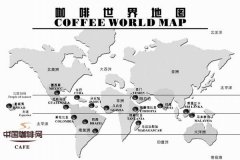
Five Environmental factors for growing Coffee
Coffee can not be grown in any environment, because it is originally a plant growing in a tropical rain forest. In systematic development, coffee forms the habit of calm wind, cool, shaded or semi-shaded and humid environment. Therefore, coffee has strict requirements on planting conditions. We call the strips on both sides of the equator, between latitudes 25 degrees south and north, suitable for coffee growth as coffee belts.